If you work hard and still feel broke, you’re not lazy. You’re living in a moment where everyday costs feel higher, one-click buying is effortless, and subscriptions multiply like rabbits. When money feels tight, it’s easy to blame your paycheck, your past, or your luck.
Still, a lot of the pain comes from patterns, not one bad choice. The Habits That Keep You Poor usually look normal day to day, so they’re hard to spot. The good news is that habits can change without a total life overhaul.
This list isn’t about shame. It’s about relief. You’ll see 14 common habits that quietly block progress, plus a small replacement for each. Pick 2 to 3 to start. That’s enough to create momentum.
 Photo by Marta Branco
You don’t need perfect finances to start. You need a few better defaults.
Spending habits that quietly drain your money
Most money leaks don’t look like “bad spending.” They look like convenience. They look like small treats. They look like upgrades you “deserve.” Then you check your balance and wonder where your paycheck went.
Below are four spending habits that hit hard because they repeat.
Buying on impulse because it feels small in the moment
Impulse buying usually isn’t about the item. It’s about the moment. Stress after work, boredom scrolling, or a “limited-time” banner can push you into purchases that feel tiny. Ten dollars here, twenty dollars there, then suddenly it’s $300 you didn’t plan to spend this month.
Swap that works: add friction. Try a 24-hour rule for anything that isn’t food, gas, or medicine. Keep a wish list in your notes app. Also, delete saved cards from shopping apps so checkout takes effort. That pause is powerful.
If you want practical trigger ideas, see Experian’s guide on how to stop impulse spending. Even one or two “brakes” can cut the damage fast.
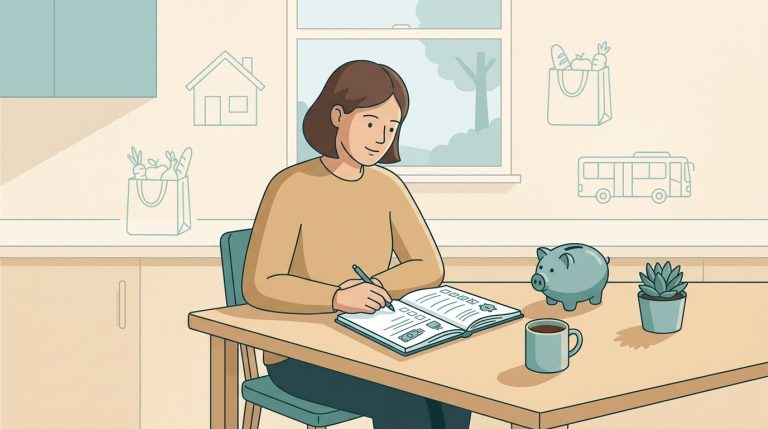
Impulse shopping often happens on the couch in quiet moments, created with AI.
Letting subscriptions and app add-ons run on autopilot
Subscriptions are sneaky because they don’t feel like spending. They feel like background noise. Yet recent survey data shows the average US household spends about $273 per month on subscriptions, and 42% of people forget at least one subscription they’re paying for.
Free trials convert. Delivery memberships renew. Streaming bundles stack up. Game add-ons and in-app upgrades land in your “misc” category, where budgets go to disappear.
Swap that works: schedule one subscription review day each month. Put it on your calendar. Make one list, then cancel anything you haven’t used in 30 days. If canceling feels annoying, NerdWallet explains why subscriptions can be tricky and offers tips in its guide on how to cancel subscriptions.
A simple rule helps: if you can’t name the last time you used it, it’s not “essential.”
Lifestyle creep, spending more every time you get a raise
Lifestyle creep is when your costs rise with your income. A better car payment “since you can.” A nicer phone because the old one “still works but…” More takeout because you’re tired. None of it is outrageous alone.
Over time, it eats your future. Surveys also suggest social pressure plays a role, with about 40% of Americans saying they’ve overspent to impress someone else.
Swap that works: save first, then upgrade on purpose. When you get a raise, set an automatic transfer for part of it that same day. Even 30% to savings or debt payoff changes your trajectory. After that, choose one upgrade, not five.
Shopping to look rich instead of building real stability
This habit has nothing to do with your character. It’s about comparison. When everyone’s posting new cars, vacations, and “hauls,” stability can feel invisible and boring.
The problem is that looking stable is expensive. Real stability is quiet. It’s an emergency fund. It’s fewer bills. It’s sleeping at night.
Swap that works: set goals that don’t show. Pick one: a $500 starter emergency fund, one credit card paid off, or one month of rent saved. Track it somewhere you’ll actually see, like a note on your fridge. Your future self is the only audience that matters.
Debt and money management habits that keep you in catch-up mode
When your system is weak, every surprise becomes a crisis. A flat tire turns into a credit card balance. A slow work week turns into overdraft fees. Interest and penalties don’t care that you’re trying.
These habits keep you stuck in “catch-up mode,” even if you’re careful.
Carrying high-interest credit card debt and paying it off too slowly
Credit card interest is brutal because it grows while you sleep. Right now, average rates sit around 21% to 24% APR, and total US credit card debt is about $1.21 trillion. Those numbers matter because even a modest balance can balloon when you only pay the minimum.
Swap that works: stop digging, then climb. First, pause new charges if you can. Next, pay more than the minimum, even if it’s $25 extra. Then choose one payoff method and stick to it.
Here’s a quick comparison of the two popular approaches:
| Method | How it works | Best for |
|---|---|---|
| Debt avalanche | Pay extra on the highest interest rate first | Saving the most on interest |
| Debt snowball | Pay extra on the smallest balance first | Staying motivated with quick wins |
The best method is the one you’ll actually do for months. Investopedia breaks it down clearly in debt avalanche vs. debt snowball.
Also, it can help to call your card issuer to ask about hardship options. A balance transfer can work too, but only if it truly lowers costs and you don’t run the balance back up.
Chasing rewards points while the balance keeps growing
Points feel like savings, so this trap is common. You tell yourself, “I’ll earn cash back.” Then interest charges wipe out the rewards, and then some.
Swap that works: treat rewards like a bonus, not a reason. Only play the points game if you can pay the statement balance in full every month. If you can’t, switch to a simple card you won’t swipe as often, or use debit for a while.
If you’re paying interest, rewards aren’t rewards. They’re a distraction.
Paying late fees and overdraft fees as “normal”
Late fees and overdraft fees are like tiny holes in a boat. One or two might not sink you. Enough of them will.
The worst part is the timing. Fees usually hit when you’re already short, so you borrow to cover them, and the cycle repeats.
Swap that works: set up guardrails. Turn on due-date reminders. Ask lenders for a new due date that matches your pay schedule. If overdrafts happen often, consider keeping a small buffer in checking (even $100) and moving the rest to savings so you don’t “accidentally spend” bill money.
Not having a simple budget or savings system, so money disappears
A budget isn’t punishment. It’s a plan for what your money needs to do before it runs off to random purchases.
You don’t need a complicated spreadsheet. You need visibility and a few rules that match your life.
Swap that works: start with three buckets: fixed bills, weekly spending, and savings or debt. Automate savings on payday, even if it’s $10. Then set one weekly spending limit for “everything else,” and track it in one place.
If you want a straightforward framework, NerdWallet outlines how to budget money in steps without making it feel like a math test.
Avoiding money conversations and not asking for help
Silence is expensive. When you avoid talking about money, you miss options like a lower bill, a payment plan, a better insurance rate, or free counseling.
Swap that works: pick one safe person and ask for 20 minutes. Use a simple script: “Can you help me look at my bills with me? I want a second set of eyes.” If you’re employed, your HR benefits team may help you find resources. Nonprofit credit counseling can also be a solid option.
You don’t need to share every detail. You just need to stop doing it alone.
Mindset and income habits that block long-term progress
Spending and budgeting matter, but income and beliefs matter too. Many people stay stuck because they fear investing, chase shortcuts, or feel defeated before they start.
These habits don’t make you a “bad with money” person. They just keep your progress small.
Depending on get-rich-quick schemes instead of steady wins
Quick-money promises hit hardest when you’re stressed. A course says you can quit your job in 30 days. A “guru” swears day trading is easy. A crypto group chat claims they’ve found the next big thing.
Most people lose because the plan depends on luck, hype, and timing. Fees and bad decisions pile up fast.
Swap that works: focus on boring progress. Build a skill that raises your pay. Increase your savings rate slowly. Invest consistently. For a reality check on common traps, SoFi explains how to spot get-rich-quick schemes.
Investing without a plan, or not investing at all because it feels scary
Some people invest like it’s a casino. Others avoid it because it feels confusing. Both paths can keep you poor over the long run because you miss time, and time is the biggest advantage most regular people have.
Swap that works: build a simple order of operations. First, cover a starter emergency fund. Next, use a retirement plan if you have one, especially if there’s a match. Then consider a basic diversified approach you can stick with.
Market ups and downs are normal. What matters most is consistency, not perfect timing.
Learning investing basics often starts at home, one calm decision at a time, created with AI.
Confusing “being cheap” with being smart, and wasting time to save pennies
Trying to save money can turn into a part-time job. Driving across town to save $2. Opening five coupon apps for one purchase. Buying the lowest-quality option, then replacing it three times.
Swap that works: think in total cost, not sticker price. Total cost includes time, gas, stress, and how long the item lasts. Put your energy into the big categories first: housing, transportation, food, and debt interest. Small wins still matter, but they shouldn’t steal your weekends.
Gig work traps: irregular pay, no benefits, and no plan for slow weeks
Gig work can be a lifeline, yet it comes with sharp edges. Real-time estimates suggest about 70 million Americans do gig work, around 36% of workers. Pay can swing week to week, and benefits often don’t exist.
Income swings lead to overdrafts, late fees, and credit card reliance. Then you work more just to catch up, which burns you out.
Swap that works: build a basic shock absorber. Keep a separate “tax” bucket if you’re a contractor. Set a minimum monthly budget based on your low weeks, not your best weeks. Add a buffer fund over time, even if it’s small. Planning for health insurance and retirement in tiny steps beats ignoring them.
A “poor me” story that keeps you from learning, earning, and trying again
This one is tender, so read it with kindness. If you tell yourself “I’m just bad with money,” you’ll avoid the actions that help. You won’t negotiate pay. You won’t apply for better jobs. You won’t learn the basics because it feels pointless.
Swap that works: change the story to something true and useful. Try: “I’m learning this now.” Or: “I can improve one habit this week.” Progress beats perfection. The goal isn’t to become a different person, it’s to become a person with better defaults.
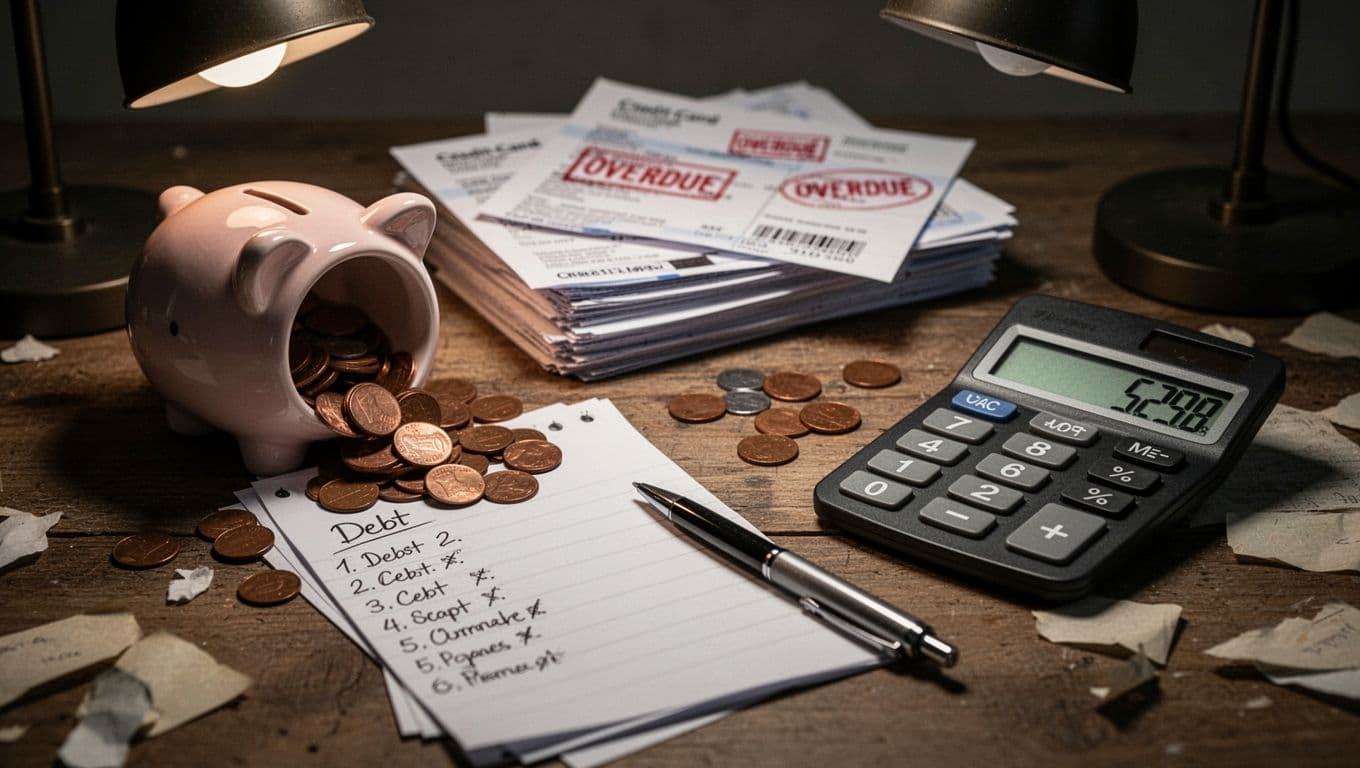 Debt can feel like clutter that never clears until you build a plan, created with AI.
Conclusion
The Habits That Keep You Poor aren’t personality flaws. They’re patterns, and patterns can change. You don’t need a perfect plan to start, you need a few small moves that create breathing room.
Pick two habits to tackle this week, one spending leak and one system change. For example: cancel one subscription, set up an auto-transfer to savings, choose a debt payoff target, and schedule a 20-minute money check-in. Small actions done consistently feel boring at first, then they feel like freedom.