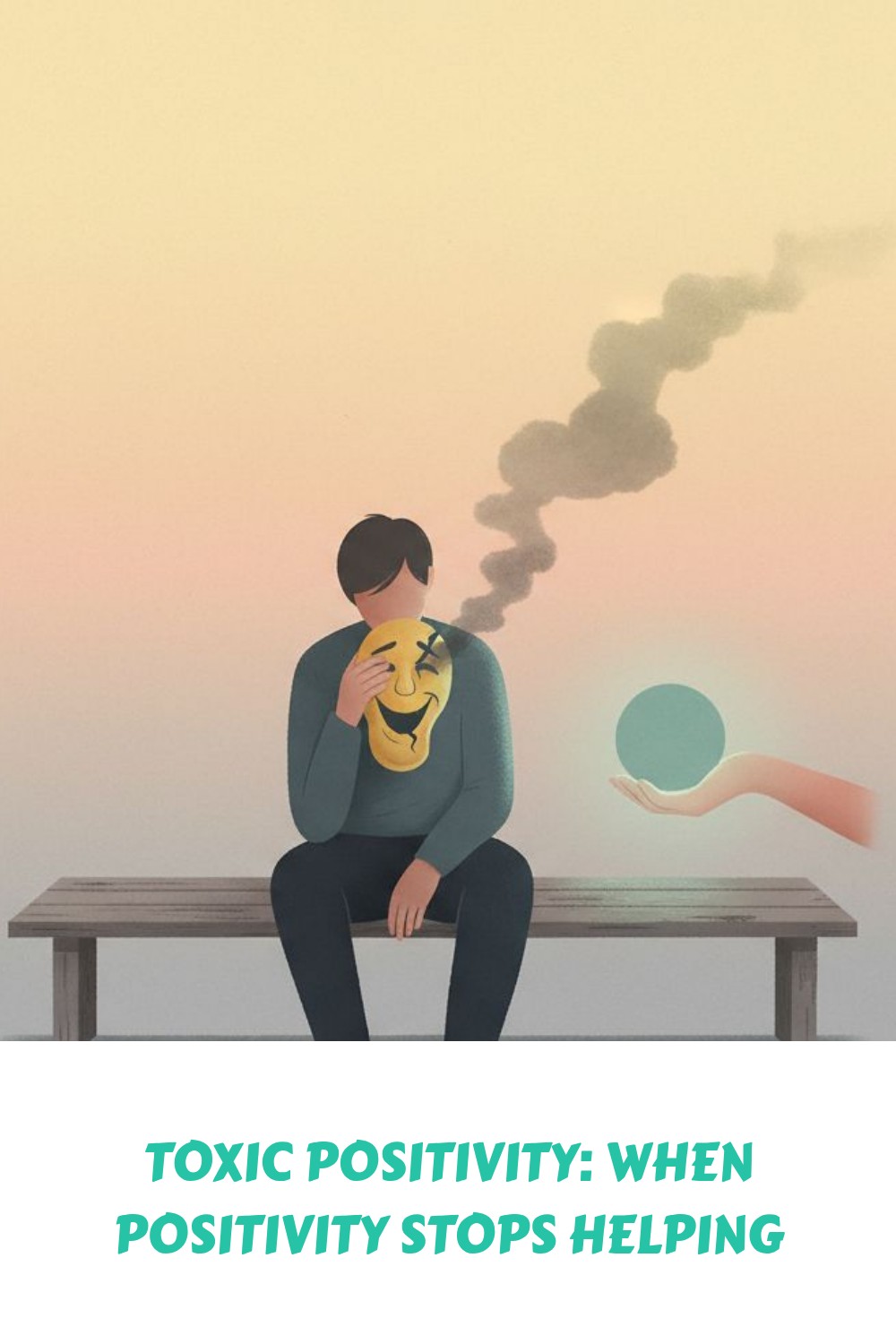
Being told to “look on the bright side” can sting when you’re already hurting. What sounds encouraging on the surface can feel lonely underneath.
That’s the heart of toxic positivity. Positivity itself isn’t the problem. The problem starts when a positive mindset gets used to push away grief, anger, fear, or shame. Real optimism makes room for the whole truth.
Once you see the pattern, it becomes easier to respond with more care, both to others and to yourself.
Healthy positivity leaves room for pain
Toxic positivity is the pressure to stay upbeat no matter what. As Verywell Mind’s overview of toxic positivity explains, it turns “good vibes only” into a rule, even during loss, burnout, illness, or heartbreak.
Healthy positivity sounds different. It might say, “This is hard, and I’m with you,” or “I don’t like this either, but we’ll take it one step at a time.” That kind of support doesn’t erase pain. It sits beside it.
That difference matters because emotions aren’t flaws. They’re signals. Sadness can point to loss. Anger can point to a crossed line. Fear can point to risk. If you cover those signals with forced cheer, it’s like taping over a dashboard light and hoping the engine fixes itself.
A positive mindset can still help. So can optimism. But they work best when they come after honesty, not instead of it. You can believe things may improve and still admit that today feels awful.
The goal isn’t to feel good all the time. The goal is to feel real, then respond with care.
This is why toxic positivity often leaves people feeling worse, not better. It adds pressure to pain. Now you’re grieving, stressed, or ashamed, and you also feel like you’re failing at being “good” or “strong.” That extra layer can create distance in relationships, too. People stop opening up when they expect their feelings to be brushed aside.
Signs positivity has turned toxic
Toxic positivity often hides inside kind-sounding phrases. That’s why it can be hard to spot. It may come from love, discomfort, habit, or fear of saying the wrong thing.
Common examples include “Everything happens for a reason,” “At least it’s not worse,” “Choose happiness,” and “Don’t be so negative.” You might hear them after a breakup, a job loss, a hard diagnosis, or plain old exhaustion. You might even say them to yourself: “Other people have it worse,” or “I should be grateful, so I shouldn’t feel bad.”
In relationships, toxic positivity can sound like shutting a door. In workplaces, it can show up as pressure to stay upbeat while real stress goes ignored. In personal growth spaces, it can turn healing into performance, where only calm, smiling emotions seem welcome.
Here’s a simple way to hear the difference:
| Harmful phrase | Healthier alternative |
|---|---|
| “Just stay positive.” | “This sounds hard. I’m here with you.” |
| “At least it’s not worse.” | “You don’t have to compare your pain.” |
| “Everything happens for a reason.” | “I’m sorry this is happening.” |
| “Be grateful.” | “You can feel hurt and grateful at the same time.” |
That last line matters. According to Everyday Health’s guide to the health effects, emotional dismissal can increase shame and isolation. A person may stop sharing, not because they’re fine, but because they no longer feel safe being honest.
What to say instead, to others and yourself
A better response starts with making room. Before you try to fix the feeling, name it. Before you offer silver linings, listen. Most people calm down faster when they feel heard, not corrected.
You don’t need perfect words. Simple ones often help most. Try, “That makes sense,” “I’m sorry,” “Do you want me to listen or help you think this through?” These phrases lower pressure. They also show respect for the person’s inner world.
The same applies to self-talk. If you’re hurting, skip the fake cheer. Try, “I’m overwhelmed right now,” “This disappointed me,” or “I can be kind to myself today.” That’s not weakness. It’s self love with both feet on the ground.
A gratitude practice can still be useful, but timing matters. Gratitude should not be used like a lid on grief. It works better when it sits beside pain. You can say, “I’m heartbroken, and I’m grateful my friend called.” Both things can be true.
That’s also where a balanced positive mindset lives. It doesn’t deny the storm. It says, “This is rough, and I’ll take one steady step.” If you want gentle tools for this kind of emotional honesty, Calm’s tips for feeling your feelings offer simple ways to slow down and notice what’s real.
Positivity helps when it adds hope, perspective, or comfort. It harms when it demands a smile before the truth has been spoken.
The healthiest form of positivity isn’t loud. It doesn’t rush pain out of the room. It sounds more like this: “I can face what’s real, and I still deserve care.”