
You sit down with a notebook, then freeze. Maybe you have bought journals, saved prompts, or promised yourself you will start tomorrow, yet the page still stays empty. That does not mean you are bad at reflection. It means that the process of self-reflection can feel daunting when your mind is full and your words feel far away.
A steady journaling habit does not start with deep thoughts. It starts with an easy way into the page, so you can stop treating writing like a test and begin treating it like a place to land. By lowering the barrier to entry, you can finally build the consistency needed to enjoy the long-term benefits of daily journaling.
Key Takeaways
- Lower the barrier to entry: A journaling habit is built through consistency and small, easy steps rather than deep thoughts or long sessions; treating the page as a place to land rather than a test removes the pressure of the blank page.
- Focus on facts and sensations: When you feel stuck, bypass the need for insight by writing simple facts about your day or physical sensations in your body; this shifts the focus from performance to presence.
- Prioritize low-pressure methods: Use tools like repeating a single prompt for a week, limiting entries to two minutes, or writing simple lists to eliminate decision fatigue and make the habit sustainable.
- Stop while it still feels easy: The secret to long-term consistency is ending your entry before you feel drained, which leaves your brain with a positive association and makes it easier to return to the page the next day.
Why the blank page feels harder than it should
Part of the problem is that journaling looks simple, but the task itself can be daunting. When you open a notebook to start writing in longhand, you are often trying to notice your feelings, pick the right words, and judge whether those thoughts sound wise enough to keep. That inner editor can shut everything down before the first sentence even arrives.
There is also a nervous system component to this. If you have spent years caring for other people, pushing through work stress, or staying fine for everyone else, naming your own inner world may feel less natural than getting things done. Silence on the page often means you are overloaded, not empty.
Dr. James Pennebaker, a psychologist at the University of Texas at Austin, spent years studying expressive writing. His work helped show that writing can support emotional processing because it gives shape to experience. This practice draws from traditions like stoic philosophy, which viewed the written word as a vital tool for self-discovery. The University of Rochester’s guide to emotional wellness also notes that journaling can help manage anxiety, reduce stress, and support mental health.
So if the page makes you tense, that reaction makes sense. You do not need a better personality to maintain a consistent journaling habit. You simply need a smaller doorway into the process.
🌿 The page does not need wisdom. It only needs one true sentence. Small truth is enough to begin.

6 gentle ways to build a journaling habit
1. 📝 Begin with what happened
When you don’t know what to write, skip the pressure of searching for meaning for a minute. Instead of attempting a formal stream of consciousness or the rigorous structure of morning pages, write plain facts. Examples include “I woke up tired,” “I kept checking my phone,” or “That conversation stayed with me.” Facts are easier than insight, and they often open the door to feeling without force. Once the page has motion, your mind stops treating it like a performance.
Try this: Write three simple facts about your day before you add any opinion or feeling.
✨ Motion matters more than depth A moving pen lowers pressure. Most pages become clearer after the first few lines.
2. ⏱️ Make it a two-minute practice
Long sessions can sound noble, but they often scare off a new practice. Two minutes is small enough to do on a tired day, a busy morning, or a night when you want to skip everything. Use habit stacking to tie your writing to something you already do, like your morning routine, coffee, brushing your teeth, or turning off your lamp. By setting these achievable goals, your habit sticks faster because the cue stays the same.
Try this: Set a two-minute timer and stop when it rings, even if you could keep going.
🫖 Ritual beats motivation most days A cue like morning coffee or bedtime works even when inspiration doesn’t show up.
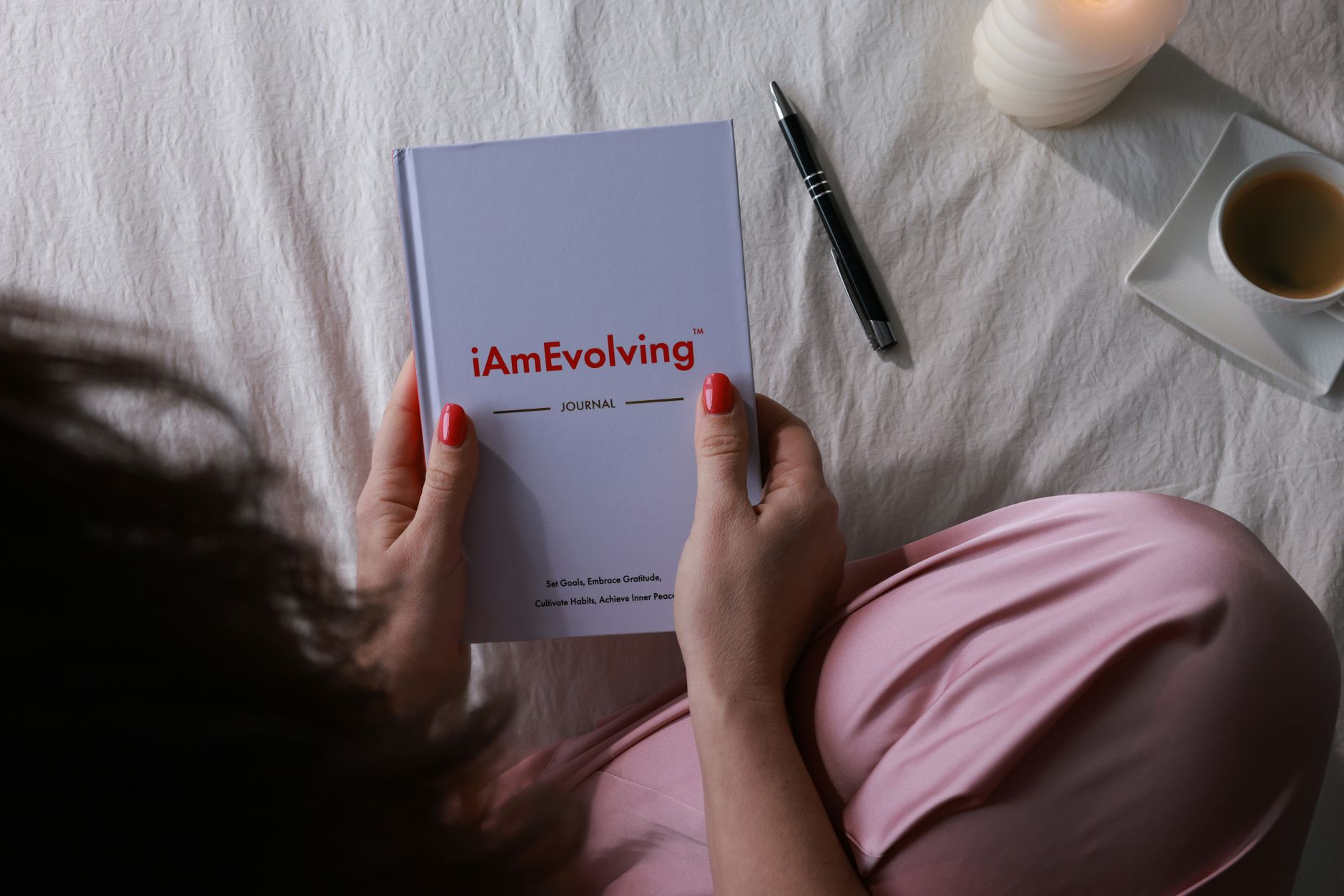
Photo by iAm Evolving
3. 💬 Use the same prompt for a week
Decision fatigue is real. If you need a fresh question every day, you may quit before you begin. Pick one of your favorite journaling prompts and stay with it for seven days, such as “What feels true today?” or “What do I need right now?” Repeating a prompt removes the pressure to be original and helps you notice patterns across the week.
If you want more variety later, these creative journaling ideas for daily practice can keep things fresh without turning your notebook into homework.
Try this: Copy one prompt onto the first page of your journal and use it all week.
4. 🧍 Let your body answer first
Some days your mind is noisy, but your body is honest. Notice your jaw, chest, stomach, shoulders, or breath. A sentence like “My chest feels tight and my hands feel cold” counts as real writing because it is real noticing. Many of the most profound journaling benefits begin with the body for this reason, as it gives you a clear starting point when thoughts feel tangled.
Try this: Write “Right now my body feels…” and finish the sentence with three physical sensations.
💛 Your body is a prompt When thoughts are foggy, physical sensations give you something solid to name.
5. 📋 Write lists when sentences won’t come
Your journal does not need full paragraphs. Lists work because they lower pressure and help you spot what matters fast. This approach, often seen in the foundations of bullet journaling, allows you to track your day using just fragments. You might use a fresh physical notebook or treat yourself to new office supplies to make the process feel inviting. You can list what drained you, what helped, what you are avoiding, what you miss, or what gave you a moment of relief.
If you want a few low-pressure starters, HelpGuide’s journaling exercises offer simple ideas that do not ask you to sound polished.
Try this: Make a list of five things you noticed today, with no explanation after each one.
6. 🌱 Stop while it still feels easy
Many people lose their writing habit because they wait for a big, meaningful entry. It works better to stop after a few honest lines, while the experience still feels light. That leaves your brain with a sense of ease, which makes establishing a routine and maintaining consistency much easier. If you find yourself gravitating toward positivity, keeping a gratitude journal can be a gentle doorway, provided you keep it honest instead of forcing yourself to sound cheerful.
Try this: End today’s entry with one unfinished line, such as “Tomorrow I want to remember…”
🌙 Stop before you feel drained Leaving a little unsaid makes tomorrow easier. A good habit grows from ease, not strain.
FAQ
What if I miss a few days?
That does not erase your progress. A consistent journaling habit is built by returning to the page, not by staying perfect. If you miss time, simply go back with one plain sentence instead of trying to catch up. If you find it difficult to return on your own, consider finding an accountability buddy who can encourage you to keep going. The restart matters much more than the gap.
What if journaling brings up feelings I don’t want to sit with?
That can happen, especially if you have been holding a lot of stress. Keep your entries short, stay with facts or body sensations, and stop if you feel flooded. If writing regularly leaves you overwhelmed, it may help to bring those feelings to a therapist or another trusted support person.
Do I need a special notebook or method?
No. A cheap notebook, a digital journal, or even a loose sheet of paper is enough. The best journal is the one that feels easy to reach for. Fancy tools can be lovely, but they do not create the habit for you. You have total flexibility to choose the format that works for your lifestyle.
What if I don’t like writing by hand?
You can still maintain a practice that feels authentic to you. Whether you prefer traditional handwritten pages, typing on your phone, or using recording apps to capture your thoughts, the medium does not matter. The goal is to give your inner life a place to land, not to look like a professional writer.
🌱 Missed days don’t erase change You don’t start over from zero. You start again from where you are.
A Gentle Place to Begin
The blank page can feel loud when you want the right words. That is a human response, not a flaw in you.
Start with one small line tonight: “Right now, I notice…” Then let the sentence be enough. A real journaling habit grows from repeatable honesty, not impressive pages. If you are unsure where to start, daily journaling does not have to be a complex endeavor. You might find success with a five-minute journal that requires minimal time, or you could explore guided journals that provide specific prompts to keep you moving. For those who prefer objective data over prose, metric journaling is another effective way to track your progress.
You do not need a deeper thought before you begin. You need a kind first step. Pick one. The rest follows.