You know that moment when you open your phone and see bad news, another bill, or a highlight reel from someone else’s life. Your chest tightens, your mind starts racing, and suddenly the day feels heavier than it did five minutes ago.
That’s where gratitude can help, but not in a forced, “just be positive” way. Real gratitude isn’t denial. It’s simply noticing what’s still good, still supportive, still true, even while other things hurt. It’s holding two realities at once.
The promise is practical: repeated gratitude uses neuroplasticity (your brain’s ability to change with practice) to strengthen “good-noticing” pathways, support calmer stress responses, and make positive feelings easier to access over time. Not instant happiness. More like a steady shift in what your mind returns to by default.
What “rewiring your brain” really means (and why repetition matters)
“Rewiring” can sound dramatic, like your brain gets replaced overnight. That’s not what happens. It’s closer to how your body changes when you walk more, sleep better, or drink more water. Small actions, repeated, change what feels normal.
Neuroplasticity means your brain adapts based on what you practice. If you practice worry, your mind gets fast at worry. If you practice appreciation, your mind gets faster at finding reasons to feel supported and hopeful. Over time, gratitude becomes less like a mood and more like a trained skill.
This matters because the brain has a built-in negativity bias. It scans for threats because that helped humans survive. Your brain isn’t broken for noticing what’s wrong. It’s doing its job. Gratitude doesn’t remove danger, it balances the scale so your attention isn’t stuck in “alarm mode” all day.
If you want a science-based explainer of what brain imaging suggests about gratitude, see UC Berkeley’s Greater Good summary on what a grateful brain looks like.
Neuroplasticity in everyday words: you strengthen what you practice
Picture attention like a path through grass. Walk it once, and nothing changes. Walk it daily, and the trail becomes clear.
That’s why short daily reps often beat rare, long sessions. Two minutes every day trains the brain more than an hour once a month, because repetition is the signal your brain trusts.
Gratitude works the same way. You aren’t trying to “think happy thoughts.” You’re training your attention to spot support, progress, kindness, safety, and meaning, even in small doses.
Why your brain defaults to negatives, and how gratitude helps
Negativity bias often pairs with rumination, the mental loop of replaying what went wrong. The brain treats unresolved problems like open tabs. It keeps refreshing them.
Gratitude shifts two things at once: attention (what you notice) and meaning (what you decide it says about your life). When you practice gratitude, you teach your brain to move from threat scanning to fuller context. You still plan, fix, and protect yourself, but you don’t have to live in the worst-case story.
The brain areas gratitude activates, and how that supports positivity
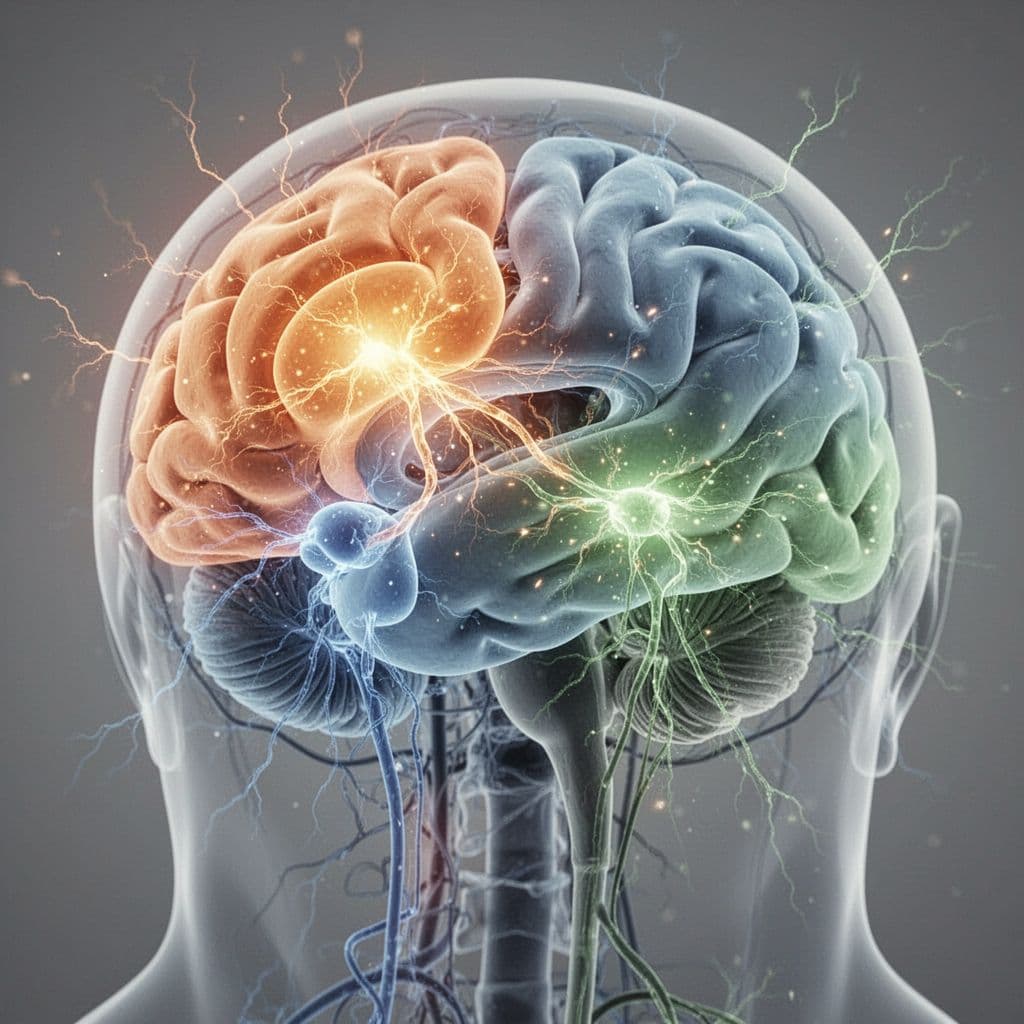
Brain imaging studies can’t read your thoughts, but they can track patterns. Across gratitude research, scans often show stronger activity in regions tied to emotion regulation, reward, and social bonding. Some structured practices, like gratitude letters, have shown effects that linger months later.
It’s important to keep this grounded: brain activity links don’t always prove cause. Still, the pattern makes sense. Gratitude is a reflective, meaning-making emotion, so it engages systems that help you evaluate, calm, connect, and choose.
One widely cited review of gratitude’s brain correlates is available in Frontiers on neural correlates of gratitude.
Prefrontal cortex: the “wise coach” that helps you regulate emotions
Your prefrontal cortex helps with planning, decision-making, and impulse control. It’s also part of how you reframe a situation. When this “wise coach” is online, you can pause and pick your next move.
Gratitude tends to involve reflection: “What helped me today?” “Who showed up?” “What did I do that worked?” That kind of thinking is linked with activity in parts of the prefrontal cortex, including the medial prefrontal cortex, which plays a role in value judgments and self-reflection.
In plain terms, gratitude gives your brain practice at stepping back. Over time, that can support steadier moods and better perspective under stress.
Amygdala and stress: gratitude can turn down the alarm
The amygdala is like a smoke detector. It reacts fast, sometimes too fast, because missing a real threat is costly.
Gratitude doesn’t tell the alarm to disappear. Instead, it can reduce how intense the alarm feels, partly because stronger prefrontal control helps regulate emotional reactions. Many gratitude studies also track stress-related outcomes, such as lower perceived stress, which lines up with this “top-down calming” idea.
A reader-friendly summary of the brain science is also covered by the American Brain Foundation’s explanation of gratitude and rewiring.
Anterior cingulate cortex: the link between feelings, empathy, and action
The anterior cingulate cortex helps you notice what you feel, manage conflict, and shift behavior when something isn’t working. It also overlaps with empathy and social understanding.
Gratitude is often about other people, even when you’re grateful for something simple. Someone taught you. Someone delivered the package. Someone listened. That social lens can warm relationships, which then feeds optimism and support during hard seasons.
Dopamine, serotonin, and cortisol: the chemistry behind “this feels better”
You don’t need to memorize brain chemicals to benefit from gratitude, but a basic map helps.
Dopamine supports reward and habit learning. When gratitude feels good, your brain tags it as worth repeating. Serotonin relates to mood steadiness and emotional balance, which can make you feel less tossed around by the day. Cortisol is a key stress hormone. Chronic stress can keep it elevated, which leaves you tense and reactive.
Gratitude practice isn’t a medication, and it won’t fix everything. Still, many people report a calmer baseline over time, which fits with research linking gratitude to better stress regulation.
What changes you might notice in real life (and how long it can take)

Brain talk is interesting, but you live in your calendar, your inbox, and your relationships. So what might change first?
A lot of gratitude research uses a few weeks of practice, often around 6 to 10 weeks. Some benefits show up sooner, and some appear later. In one common approach, participants write gratitude letters, and follow-up measures sometimes show improvements months after the practice ends.
For a deeper look at how gratitude writing affected brain responses tied to helping others, see the University of Oregon’s report on gratitude writing and the brain’s value signals.
A helpful way to think about it: gratitude doesn’t erase your stressors, it changes your recovery time after them.
Small shifts first: more “good spotting,” less overthinking
Early changes can be subtle. You might not wake up glowing. Instead, you may notice small moments where your mind catches itself.
Here are common early signs people describe after a week or two of consistent practice:
- More “good spotting” in ordinary moments, like a warm shower or a kind cashier.
- Less spiraling after a mistake, because your brain finds balance faster.
- A pause before reacting, so you don’t snap as quickly.
- A lighter body feel, even if your problems haven’t changed.
Those shifts matter because they change what happens next. One calmer minute can prevent an argument. One better night of sleep can improve the whole week.
Longer-term shifts: better bounce-back and stronger relationships
Over time, gratitude can support resilience. When your brain has a practiced way to find support and meaning, setbacks feel less like proof that life is broken.
Relationships often improve too, for a simple reason: gratitude makes appreciation visible. People respond to being seen. A coworker who feels valued usually collaborates more. A partner who hears “thank you for carrying that load” often softens, even mid-conflict.
That doesn’t mean you stop asking for change. It means you address problems without treating each other like the problem.
A simple gratitude practice that builds a positive brain, without feeling fake
 A short daily journaling habit can make gratitude feel concrete and doable,
If gratitude has ever felt cheesy, the fix is not to try harder. The fix is to get more concrete. Vague gratitude often feels like a slogan. Detailed gratitude feels like real life.
Also, use gratitude as an addition, not a replacement. You can be grateful and still set boundaries. You can appreciate what’s good and still grieve what’s missing.
The 2-minute daily method: 3 specific things, and why details matter
Do this once a day, ideally at the same time.
- Write three specific things you’re grateful for from the last 24 hours.
- Add one short “because” for each item (the reason makes it real).
- Name the feeling it created (calm, relief, pride, connection).
An example beats a thousand instructions:
“I’m grateful my friend checked in because I felt less alone. I felt relieved.”
Specificity trains attention like a spotlight. “I’m grateful for my family” can be true, but it’s broad. “I’m grateful my sister made me laugh on the phone” gives your brain a clear target, and that makes the reward signal stronger.
Common blocks, and quick fixes:
- “I can’t think of anything.” Start smaller. Be grateful for a chair, clean water, a five-minute break, a song, a decent meal.
- “I feel guilty.” Gratitude doesn’t mean others don’t suffer. It means you’re noticing what helps you keep going.
- “It doesn’t work.” Track the right outcome. Look for quicker recovery, fewer spirals, or better sleep, not constant joy.
If you’re curious about brain imaging research on gratitude practice, the Harvard repository includes the full text of an fMRI study here: functional MRI study of gratitude practice.
Gratitude that sticks: letters, voice notes, and “thank-you” texts
Journaling is only one format. The best format is the one you’ll repeat.
- Letters work well when you want depth and meaning, even if you never send them.
- Voice notes fit busy days, especially if you commute or walk.
- Thank-you texts create quick social warmth and reinforce connection.
Here’s a simple gratitude message template you can copy:
“Hey [Name], I’ve been thinking about [specific thing you did]. It helped me because [impact]. I really appreciate you, and I felt [emotion] afterward.”
If you want to go more research-heavy, the study “The effects of gratitude expression on neural activity” is available via ScienceDirect’s article page.
Conclusion
Gratitude rewires your brain for positivity in a quiet way: repeated practice uses neuroplasticity to strengthen attention, emotion regulation, and reward pathways. Over time, that can make calm and hope easier to reach, even when life stays complicated. Hard days still count, and you don’t have to pretend otherwise.
Try the 2-minute method for 14 days. Track one small change, like sleep, stress recovery, or patience. Then share one real thank you with someone today, and notice what shifts in the next hour.