Stress doesn’t always leave when the hard moment ends. It can linger in the jaw, chest, shoulders, belly, and breath because the body stays stuck in the fight or flight response. That’s why learning how to release stored stress can feel so helpful, especially when your mind wants calm but your body still feels braced.
The good news is that you don’t need intense catharsis to feel better. In most cases, small, steady, body-based practices work best. They help you settle, notice safety, and come back to the present without pushing too hard, allowing recovery from bracing before it contributes to chronic stress.
This article is educational and not a substitute for medical or mental health care.
What stored stress can feel like in everyday life
Stored stress often looks ordinary at first. You may notice muscle tension, a clenched jaw, shallow breathing, restlessness, or that wired but tired feeling at night. Some people feel heavy and flat. Others feel jumpy from hypervigilance, foggy, or irritated for no clear reason.
That doesn’t mean something is wrong with you. It often means your body is still carrying the imprint of pressure, overload, or too little recovery time. Stress can even surface as physical signals, and an unexplained itchy neck is one example of the body speaking up. Everyday stress relief is not about forcing a big emotional release. Instead, it’s about helping the body soften protective patterns like the fight or flight response and freeze response that have stayed switched on.
If you have a trauma history, childhood trauma can shape these adult physical reactions, so body-based practices can feel mixed. A method that calms one person may feel activating for another. So think of this process like loosening a tight knot, not yanking it apart. Slower is often safer, and safer usually works better.
Start with safety cues before trying to release stored stress
Before you try to move tension out, help your body feel a little more supported. This matters because a body that feels cornered will often grip harder.
Try these simple grounding techniques:
- Orient to the room. Look around slowly and name five neutral things you see, like a lamp, window, or chair.
- Deep breathing exercises. Place a hand on your chest or belly. Inhale gently with a focus on diaphragmatic breathing, then let the exhale run a little longer. Repeat for five rounds. If deep breathing feels bad, keep the breath natural and just sigh softly.
- Use the floor. Press both feet into the ground for 10 seconds, then let the pressure go. Notice any change in your legs, hips, or breath.
These grounding techniques activate the parasympathetic nervous system and stimulate the vagus nerve for better calm.
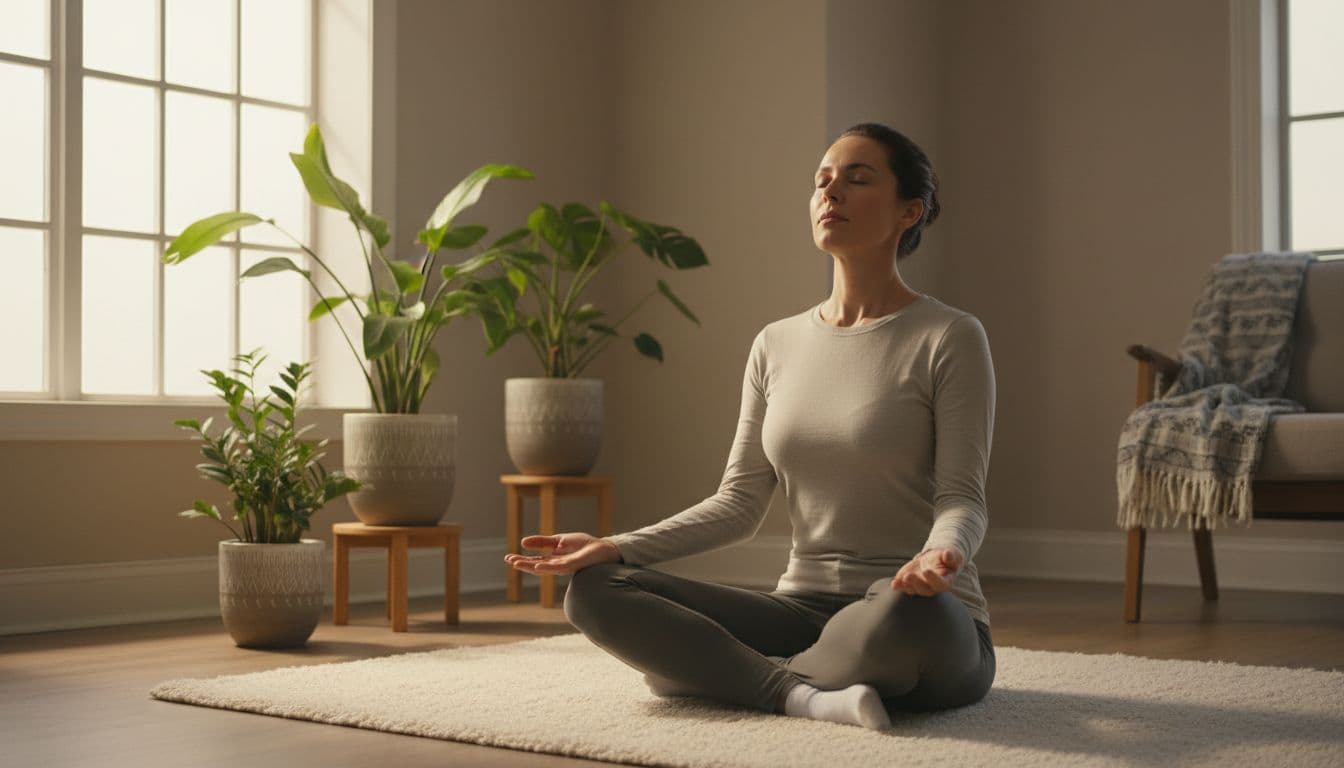
You can also add gentle self-contact. For example, a somatic hug technique may help some people feel more contained and grounded.
If a practice makes you feel more keyed up, go smaller, slower, or stop to stay within your window of tolerance. That’s wise, not weak.
This is also where mindset helps, but only if it’s kind. Forced positivity can feel fake when your body is overwhelmed. A positive mindset grows more naturally after your body feels a bit safer. Later, a short gratitude practice, gentle optimism, and real self love can support the shift. First, though, let the body lead.
Use gentle movement, not force
Once you feel a little steadier, light movement drawn from principles of somatic experiencing and somatic therapy can improve the mind-body connection and help release stored stress without overwhelming you. Think soft waves, not a storm.
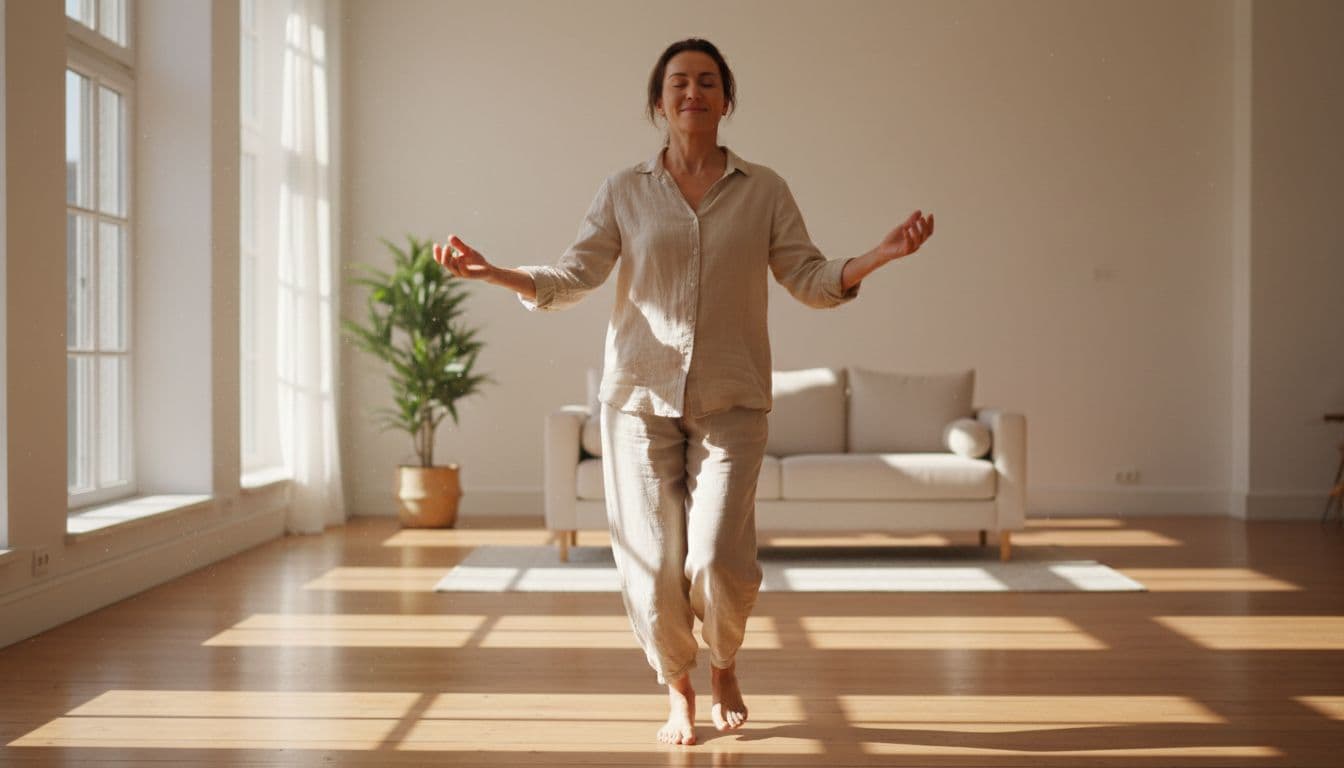
One simple option is therapeutic shaking. Start with your hands for 10 to 15 seconds. Then pause. Notice your somatic sensations like breath, heart rate, and mood. If that feels okay, add your arms or softly bounce your knees. Keep your jaw loose and your eyes open. Stop before it feels intense. Beginner-friendly body-based techniques to calm your nervous system can offer more examples.
Self-massage can help too. Use your fingertips to make slow circles along your shoulders. Cup the back of your neck with warm hands. Rub your forearms or press your palms together to ease muscle tension. Soft contact often works better than digging into sore spots. When pressure is too strong, the body may guard instead of relax.
You can also try a slow walk, side-to-side swaying, or a light stretch to release hip tension. Keep the range small. Let your arms swing naturally. If your breath gets tight, make the movement smaller. Rhythm often tells the body that the hard part is over.
Signs a method is helping, and signs to back off
A quick body check of somatic sensations can keep your practice safe. Here’s a simple guide that serves as a tool for emotional regulation:
| Helping signs | Signs to pause |
|---|---|
| Breath feels easier | Breath gets tighter |
| You feel more present | You feel spacey or panicky |
| Muscles soften a bit | Tension spikes sharply |
| You feel warmer or calmer | You feel dizzy or flooded |
If you notice the right column, pause right away. Open your eyes, look around the room, touch a wall, sip water, or sit with both feet planted. Then end the practice if needed. Shorter sessions usually work better than pushing through.
When everyday stress relief may not be enough
Gentle practices are best for everyday tension, overwhelm, and stress build-up. However, if body-based work often leaves you deeply distressed, numb for long periods from a dysregulated nervous system, panicky, or unable to return to normal tasks, especially when addressing stored trauma, it may be time for more support.
The same goes for ongoing sleep trouble, worsening stress symptoms, chronic pain, or physical discomfort that doesn’t ease, including complex relational trauma. In those cases, a licensed therapist, trauma-informed practitioner, or medical clinician providing trauma-informed care and knowledge of polyvagal theory can help you figure out what fits your needs. If you want context for what guided support can look like, this trauma-informed guide to physical stress release offers a helpful overview.
A calmer body usually changes in small steps
To release stored stress safely, start small and stay curious. Support comes before release, and gentleness works better than force. With practice, your body can learn that it doesn’t have to hold so tightly all the time. That shift may begin with one longer exhale, one softer shoulder, and one moment of self love. Over time, these steps lead to better nervous system regulation, while lowering cortisol levels offers a key biological benefit of staying consistent. Once you master these basics, you might explore progressive muscle relaxation as another gentle tool. For a fuller approach to daily stress that includes mindset shifts and practical habits, see this guide to positive stress management.