Emotional baggage and trapped emotions don’t stay in your thoughts. They often settle in the jaw, chest, belly, shoulders, and hips.
When you want to release emotional tension, forced positivity rarely helps due to the mind-body connection. Your nervous system usually needs a small sense of safety before it can soften. These gentle practices can help you notice, move, and ease tension without pushing too hard.
Key Takeaways
- Emotional tension often lodges in the jaw, chest, belly, shoulders, and hips; gentle practices create safety for the body to soften without force.
- Calm the body first with belly breathing to activate the parasympathetic response and grounding through feet and senses to reduce bracing.
- Let tension move via short shaking, slow stretching in tight areas, and steady walking to discharge stress energy.
- Reconnect through self-massage and slow mindful movement to build trust, presence, and self-love in the body.
- Start small, repeat often, and seek professional support if strong emotions persist for sustainable healing.
Start by calming the body first
1. Use belly breathing to loosen the grip
Shallow breathing can keep the body braced. Belly breathing, a form of breathwork, does the opposite. It activates the parasympathetic nervous system to signal that this moment may be safe enough to unclench.
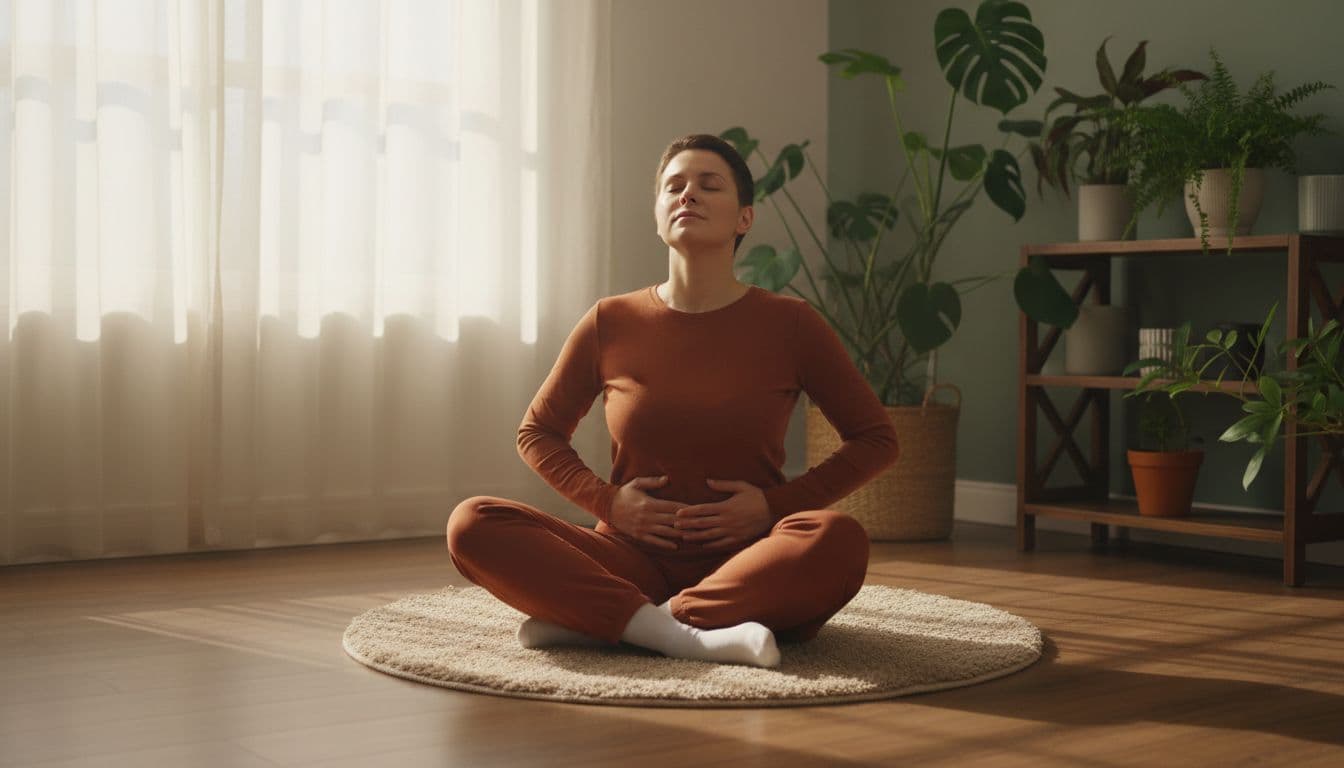
Sit or lie down in a comfortable position. Place one hand on your chest and one on your belly. Inhale through your nose for a count of four, then exhale for a count of six. Let the belly rise more than the chest. Start with five rounds.
A positive mindset is easier when your breath slows first. You don’t have to talk yourself into calm. You can breathe your way toward a little more space.
2. Ground through your feet and senses
Emotions can make you feel scattered or floaty. Grounding brings attention back to the present and into the body.
Stand with both feet on the floor, or sit and press your soles down. Notice where your weight lands and the physical sensations there. Then name five things you see, four things you feel, and three things you hear. Keep your eyes open if that feels better.
Grounding won’t erase pain. Still, it can lower the volume enough for you to stay with yourself. That kind of steadiness often matters more than chasing quick relief, as it helps reduce muscle tension in the lower body. A body scan meditation can deepen this sense of presence and help release tension you may not have noticed.

Let tension move instead of staying stuck
3. Try gentle shaking for one minute
Stress often triggers a lingering fight-flight-freeze response that leaves stagnant energy charged in the muscles. A short, loose shake can help the body discharge some of that energy.
Stand with soft knees. Shake your hands, then your arms, then let the movement travel through your legs. Keep it light. You’re not trying to perform. You’re giving tension a way out.
If you feel dizzy or overwhelmed, stop and return to your breath. Small movements count.

4. Stretch the places that clench first
Many people store emotion in the neck, shoulders, lower back, and hips. Slow stretching can invite those areas to let go.
Roll your shoulders. Tilt your head side to side. Reach your arms overhead, then fold forward with bent knees. If your hips feel tight, try a gentle seated figure-four stretch. Hold each shape for a few breaths, and stay well below pain.
The goal isn’t a deep stretch. The goal is a kind one. When you move with less force, the body often responds with less resistance.
5. Take a short, steady walk
Walking as a form of intentional movement gives stress somewhere to go. The rhythm of your steps can settle the mind while the body works through unprocessed emotions.
Walk for 10 minutes without rushing. Let your arms swing. Feel your feet meet the ground. If thoughts race, bring your attention back to the next step and the next breath.
After a walk, optimism may feel more honest, not forced. You may also find that a simple gratitude practice comes easier because your body isn’t carrying as much pressure.
Reconnect through touch and mindful movement
6. Use self-massage as a form of self love
Gentle touch can help you feel present again. It can also soften places where cellular memory holds more emotion than you realized.
Massage your jaw with small circles. Rub the back of your neck. Press your palm over your chest or belly and stay there for a few breaths. You can also squeeze your forearms or massage your hands, finger by finger.
This is one quiet form of bodywork and self love. Techniques like these draw from somatic experiencing and somatic psychology. They do not need candles, affirmations, or a perfect mood. They can be as simple as giving your body the message, “I’m here with you.”
7. Choose slow, mindful movement over intensity
When tension runs high, hard exercise can feel like too much. Slow movement often works better because it builds trust instead of strain.
Try swaying from side to side while noticing your physical sensations, rolling through your spine, or moving your arms in wide circles. Keep your jaw soft. Let your breath guide the pace. If a motion feels too exposed, make it smaller or skip it.
If a practice feels too intense, reduce the range, shorten the time, or stop. Your body responds best when it has choice.
Real positivity grows from safety, not pressure. These practices promote emotional healing and stress reduction to help release emotional tension. If strong emotions, panic, numbness, or painful memories keep showing up, support from a licensed mental health professional can help you feel more steady.
Frequently Asked Questions
How do I know if these practices are working?
You may notice shallower breaths deepening, muscles softening, or a sense of steadiness returning. These shifts signal the nervous system relaxing, even if emotions don’t vanish instantly. Over time with consistency, everyday tension eases, creating space for calmer thoughts.
What if a practice feels too intense or overwhelming?
Reduce the range of motion, shorten the time, or pause and return to belly breathing. Your body thrives on choice, not pressure—small adjustments keep it gentle and safe. Trust your signals to guide the pace.
Can these replace therapy or professional help?
These tools support daily emotional release but don’t substitute for licensed mental health care, especially with trauma, panic, or numbness. They complement therapy by helping your body feel safer between sessions. Consult a professional for deeper work.
How often should I practice these?
Start with one practice daily, even for a few minutes, letting your body set the rhythm. Regularity builds trust more than intensity. As ease grows, you can layer in others naturally.
Why focus on gentle methods instead of intense exercise?
High intensity can reinforce bracing when tension is high; gentle approaches signal safety first, allowing real softening. They draw from somatic principles to discharge energy without overwhelm. True relief comes from presence, not pushing.
Final thoughts
The body often holds what the mind can’t finish. Breath, grounding, movement, walking, and touch can serve as sustainable tools for a lifelong healing journey, helping release some of that stored tension in a gentle way as part of trauma recovery.
You don’t need a perfect routine. Start with one practice, repeat it often, and let your body set the pace. Regular practice can help manage chronic pain, and over time, a little more ease through muscle relaxation can create room for a calmer mind, a softer body, and a more grounded sense of well-being.