When your day feels like 30 browser tabs at once, your body often acts like every tab matters right now. Nervous system calming habits can help, and they don’t need an hour, a silent house, or perfect focus.
What helps most is repetition. Small cues of safety, done often, can soften the strain of rushed mornings, packed work hours, long commutes, and tired evenings. Start with the habits that fit the life you already have, and if mornings are your hardest window, these grounding rituals for stressful mornings give you a doable sequence.
Start the morning with fewer stress signals
1. Pause before you touch your phone
If your first move is checking messages, your body starts the day in react mode. A softer start takes less than a minute.
Sit up, put both feet on the floor, and take three slow breaths. Look around the room, unclench your jaw, and let your shoulders drop. That short pause can help your body feel less chased before the day even begins.
2. Get daylight and lengthen one exhale
Light helps your body clock settle into the day. Meanwhile, a longer exhale can send a simple cue that the rush may be easing.
Open the curtains, step onto the porch, or stand near a window while the coffee brews. Breathe in for a comfortable count, then breathe out a little longer. If mornings are chaotic, do it in the driveway, at the bus stop, or while walking the dog.
3. Drink water before the second cup of coffee
Busy adults often stack stress on top of caffeine without noticing. A glass of water creates a brief pause, and pauses matter.
Pair that sip with one kind sentence to yourself, such as “I can start gently” or “I don’t need to race.” That simple act is a form of self love. It doesn’t make you less productive, it makes your starting point calmer. If you want more ideas in this same low-pressure style, these daily nervous system practices for calm and balance offer a helpful next step.
The goal is not a perfect morning. The goal is to lower the volume of stress before the day gets loud.
Use work breaks and commuting time as reset cues
4. Take a 60-second breathing break at your desk
A short break can work better than waiting for a full hour of peace that never comes. One minute is often enough to interrupt the build-up.
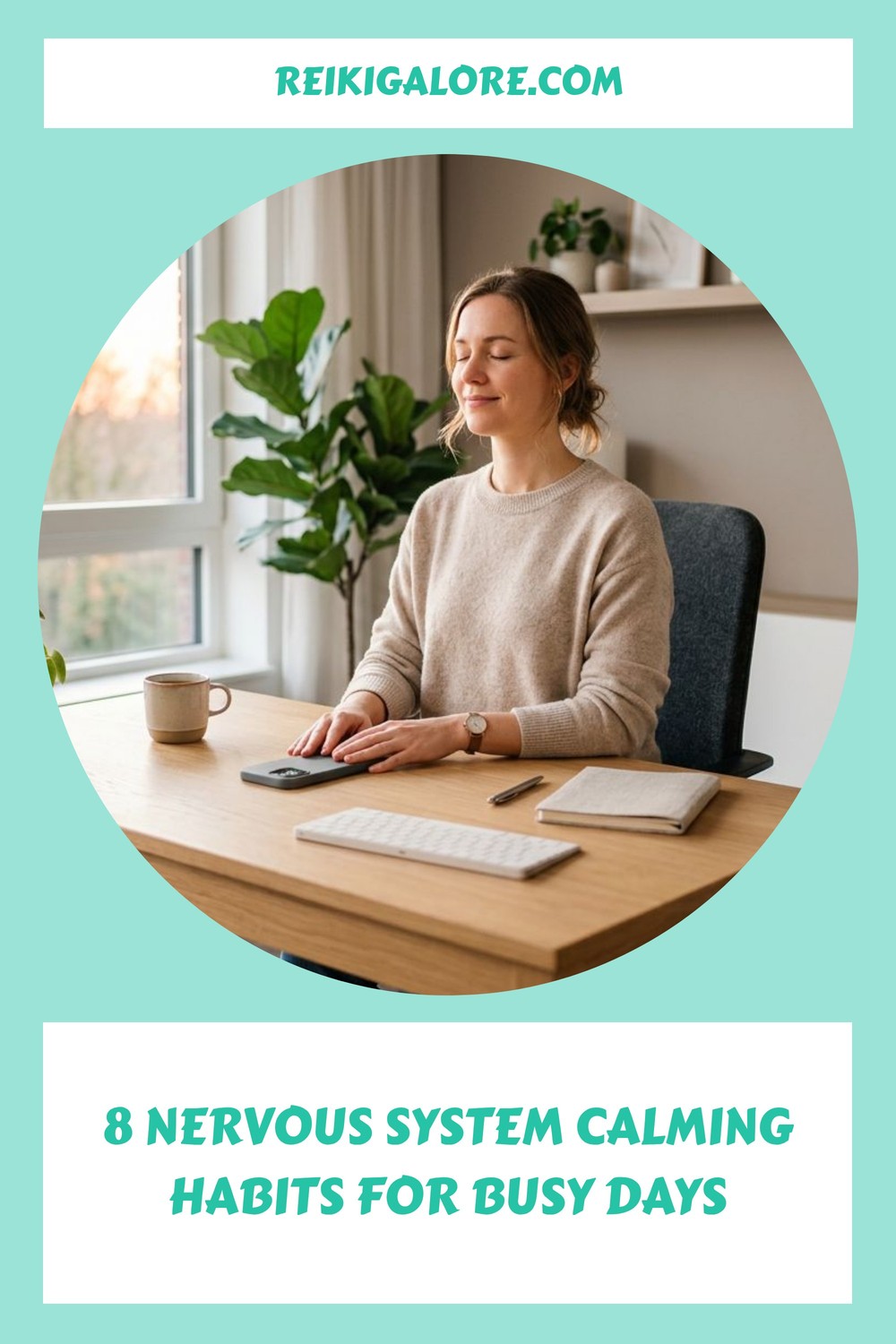
Place your hands on your belly or thighs. Inhale through your nose, then let the exhale run longer than the inhale. Drop your shoulders as you breathe. That pattern may help your body shift out of high alert and into a steadier rhythm.

5. Unclench during your commute
Commutes often become hidden stress time. Even when you’re sitting still, your body may still be bracing.
At a red light, on the train, or while waiting for the elevator, relax your grip. Loosen your tongue from the roof of your mouth. Soften the muscles around your eyes. If you’re walking between meetings, match your steps to your breath for one block. These small releases keep tension from stacking hour after hour.
6. Take a short grounding walk, even if it’s only five minutes
After long screen time, your attention can feel scattered. A quick walk gives your senses something real to land on.
Feel your feet hit the ground. Notice the air on your skin and one sound around you. You don’t need forced positivity here. Honest attention works better. Many people find that small outdoor resets improve focus because the body gets a break from constant input. For more low-effort ideas, this piece on tiny habits that help regulate your nervous system is worth reading.

Wind down without needing a perfect evening
7. Lower the noise after dinner
Your body notices light, sound, and pace. Because of that, your evening environment can either keep stress humming or help it settle.
Dim one lamp. Put your phone across the room for 20 minutes. Do one slow chore without music, podcasts, or scrolling. Folding laundry or wiping the counter can become a steady rhythm instead of more input. This habit draws a clear line between “still on” and “home now.”
8. Keep a two-line gratitude practice
A short gratitude practice doesn’t erase a hard day. It gives your mind one balanced place to rest.
Write down two things that felt good, steady, or kind. Keep them small: warm tea, a finished task, a child laughing, five quiet minutes in the car. Over time, this can support optimism because your attention starts noticing what helped, not only what drained you. That builds a more positive mindset in a grounded way, not a fake one. If you like this gentle approach, these gentle nervous system habits for daily calm offer a few more ideas.

A calm day is built in minutes
Busy days may not change soon. Still, your body responds to small repeated cues, and that is good news.
Pick two habits, not all eight. A morning phone pause and an evening gratitude note are enough to begin. The most helpful routines are usually the ones you can repeat, because steady beats perfect every time.